
Table of Contents
- How Did the Pandemic Change Companies' Expense Structure?
- How Should Remote Work Expenses Be Managed?
- Why Was Cost Control So Important During the Crisis?
- What Role Did Digital Expense Management Solutions Play During the Pandemic?
- How Did Companies Adapt to the Pandemic?
- What Changed in Expense Management After the Pandemic?
- What Expense Management Lessons Were Learned From the Pandemic?
- Frequently Asked Questions (FAQ)
- Which expense categories increased the most during the coronavirus period?
- Should the company cover remote work expenses?
- What should be considered when choosing digital expense management software?
- Why is pandemic expense management important for small businesses?
- What was the biggest change in expense management after the pandemic?
- Get Ready for the Future of Expense Management With Masraff
Coronavirus-era expense management became one of the most critical agenda items for corporate finance departments during the pandemic, and the lessons from that period still hold true today. The COVID-19 outbreak, which began in late 2019 and swept the world in 2020, fundamentally changed the way companies operate. The shift to remote work, the need for digital transformation, and uncertain economic conditions made spend control more important than ever. In this article, we look at the expense management lessons learned during the pandemic and how they can be applied today.
How Did the Pandemic Change Companies' Expense Structure?
Before COVID-19, most companies' expense management processes relied heavily on paper and physical approval mechanisms. Employees collected receipts after business trips, filled out expense forms by hand, and obtained physical signatures from their managers. The pandemic made this process impossible overnight.
With offices closing and the shift to remote work, traditional expense management processes broke down completely. Physically handing in receipts, face-to-face approvals, and manually processing documents in accounting departments were no longer possible. This left companies facing two core problems: tracking existing expenses and managing newly emerging spend categories.
During the pandemic, companies' expense structures underwent a fundamental transformation. As business travel spending dropped to nearly zero, technology investments and remote-work infrastructure costs rose rapidly. Video conferencing software, cloud storage solutions, cybersecurity tools, and employees' home-office needs were added to budgets as new expense categories.
How Should Remote Work Expenses Be Managed?
Remote work expenses became one of the most significant spend categories to emerge from the pandemic. The costs companies needed to cover so employees could work productively from home included:
- Technology equipment: Hardware needs such as laptops, monitors, keyboards, mice, and headsets
- Internet and communication: Support for high-speed internet connections and mobile communication costs
- Software licenses: Subscriptions for video conferencing, project management, and collaboration tools
- Ergonomic furniture: Desks, office chairs, and lighting equipment
- Cybersecurity: VPN services, antivirus software, and data protection solutions
Managing these expenses effectively required companies to establish clear policies. It was critical to explicitly define which expenses would be covered by the company, spending limits, and approval processes. Digital expense management solutions stepped in at this point, making it possible for remote teams to easily report their expenses and for managers to track that spend in real time.
Why Was Cost Control So Important During the Crisis?
Pandemic spend control was vital for companies to stay afloat. In an environment where revenue streams became uncertain, supply chains were disrupted, and market conditions were constantly shifting, every single expense item needed to be scrutinized and optimized.
The core strategies companies applied for cost control during the crisis were:
1. Re-prioritizing spending: Essential and non-essential expenses were clearly separated. Technology investments critical to business continuity were prioritized, while entertainment expenses and luxury spending were minimized.
2. Increasing budget flexibility: Instead of fixed budget plans, companies adopted dynamic budget models that could quickly adapt to changing conditions. Monthly or weekly budget reviews became standard practice.
3. Restructuring supplier relationships: Existing contracts were reviewed, unnecessary subscriptions were canceled, and new payment terms were negotiated with suppliers.
4. Strengthening cash flow management: Preserving cash reserves became the top priority. Unnecessary spending was halted while strict tracking mechanisms were put in place to ensure mandatory payments were made on time.
What Role Did Digital Expense Management Solutions Play During the Pandemic?
Digital expense management emerged as one of the solutions companies needed most during the pandemic. The necessity of moving physical processes online accelerated the adoption of expense management software by many companies.
The advantages digital solutions provided included:
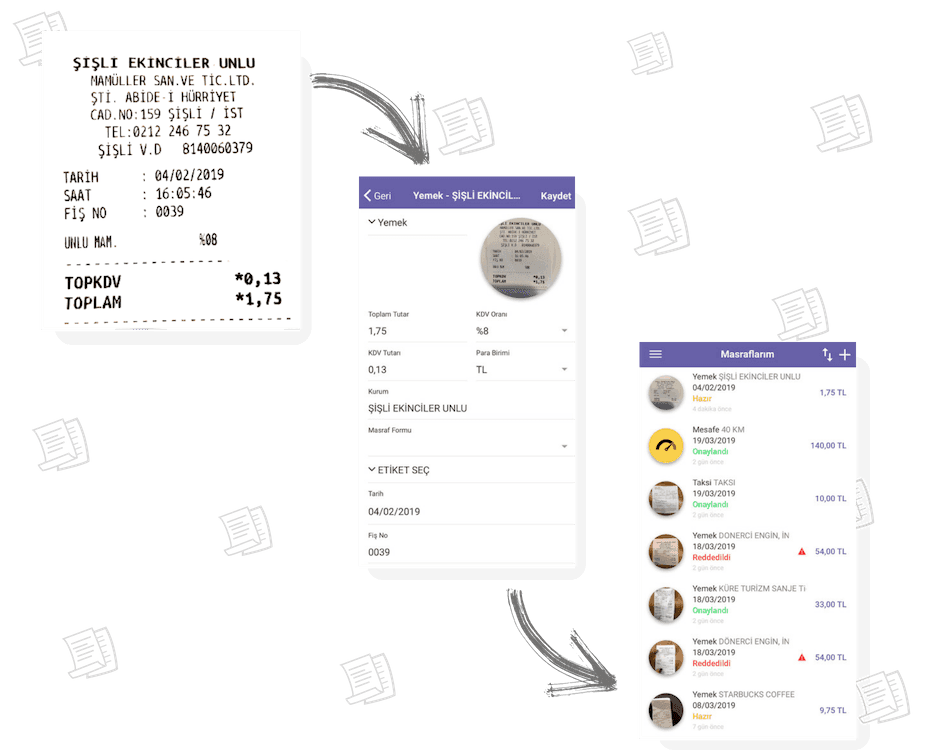
- Mobile receipt scanning: Employees could scan expense receipts with their phone's camera and upload them to the system instantly. This feature completely eliminated the need for physical receipt hand-in.
- Automated approval workflows: Expense requests were routed to managers digitally, and approval processes could be carried out regardless of location.
- Real-time reporting: Finance teams could monitor spending instantly and catch budget overruns early.
- Policy compliance: The system automatically flagged requests that violated company spending policies, preventing non-compliant spending.
- Integration capabilities: Integration with accounting software and ERP systems minimized data-entry errors and duplicate transactions.
The pandemic turned digital transformation from an option into a necessity. Companies that adopted digital expense management tools early were able to maintain operational continuity while also gaining significant advantages in cost optimization.
How Did Companies Adapt to the Pandemic?
The companies that succeeded during the pandemic shared a common trait: the ability to adapt quickly to change and use technology effectively. The adaptation process generally unfolded in three stages:
Stage one — Crisis management (first 1-3 months): During this period, companies focused primarily on maintaining business continuity. Remote work infrastructure was rapidly set up, communication channels were restructured, and emergency spending policies were established. The biggest challenge for expense management was moving existing processes online and getting employees adapted to new systems.
Stage two — Stabilization (3-6 months): After the initial shock passed, companies began developing more sustainable solutions. Remote work policies were formalized, spending limits were updated, and digital tools were integrated more comprehensively. During this period, COVID-era expense management strategies began to mature.
Stage three — The new normal (6+ months): Companies developed long-term strategies, recognizing that pandemic conditions could be permanent. Hybrid work models were adopted, digital expense management solutions were made permanent, and budget planning processes were redesigned around the new realities.
What Changed in Expense Management After the Pandemic?
Although the pandemic ended, its effects on expense management endured. Here are the new approaches companies adopted in the post-pandemic period:
The permanence of the hybrid work model: Many companies adopted a hybrid model rather than a full return to the office. This requires managing both office and remote-work expenses simultaneously. Remote work costs are now planned as a permanent budget line item.
A digital-first approach: Rather than reverting to paper-based processes, digital expense management solutions became the standard. Mobile expense entry, digital approval processes, and automated reporting are now accepted as the norm.
Data-driven decision-making: The data gathered during the pandemic gave companies a better understanding of their spending patterns. This data forms a valuable resource for future budget planning and cost optimization.
Flexibility and resilience: Companies now tend to build flexible budget structures and emergency funds to be better prepared for unexpected crises. Expense management processes are being designed to adapt quickly to changing conditions.
What Expense Management Lessons Were Learned From the Pandemic?
The coronavirus era taught companies invaluable lessons about expense management. The most important of these are:
Digital transformation cannot be postponed: Companies that remained dependent on physical processes struggled the most during the crisis. Investing in digital expense management infrastructure is no longer a luxury but a necessity.
Flexibility is vital: Rigid budget structures and unchanging spending policies make companies fragile during times of crisis. Flexible, adaptable systems must be put in place.
Real-time visibility is essential: Tracking spending with delay is unacceptable during a crisis. Instant reporting and early-warning mechanisms should be standard.
Employee experience matters: Expense management processes must be easy and accessible for employees. Nobody adopts complex, time-consuming processes.
Scenario planning is a must: Expense management plans prepared in advance for different crisis scenarios enable companies to take rapid action in unexpected situations.
Frequently Asked Questions (FAQ)
Which expense categories increased the most during the coronavirus period?
The expense categories that showed the most notable increase during the pandemic were technology investments. Hardware purchases such as laptops, monitors, and peripherals; software subscriptions for video conferencing, cloud storage, and cybersecurity; internet and communication support; and hygiene and health supplies were among the categories that saw the biggest spending increases.
Should the company cover remote work expenses?
Under current labor legislation, employers are required to cover the equipment and infrastructure employees need for work. The extent to which expenses such as internet, electricity, and equipment will be covered during remote work should be defined in the remote work agreement between employer and employee. Many companies have defined standard packages and spending limits on this matter.
What should be considered when choosing digital expense management software?
When choosing a digital expense management solution, the following criteria should be considered: mobile app support and receipt scanning capability, automated approval workflows and policy compliance checks, integration capability with existing accounting and ERP systems, real-time reporting and analytics dashboards, data security and regulatory compliance, and ease of use with a fast adoption curve. Comprehensive solutions like Masraff offer all of these features on a single platform, allowing companies to digitize their expense management processes end to end.
Why is pandemic expense management important for small businesses?
Small businesses, due to their limited cash flow and resources, are the entities most affected during times of crisis. Effective pandemic spend control significantly increases a small business's chances of survival. Digital expense management solutions make it possible for small businesses, just like large companies, to track spending professionally.
What was the biggest change in expense management after the pandemic?
The biggest post-pandemic change is that digital-first approaches have become permanent. Companies no longer consider returning to paper-based expense processes. Instead, technologies such as mobile expense entry, automated approval mechanisms, and artificial intelligence-powered spend analysis have become standard practice.
Get Ready for the Future of Expense Management With Masraff
The pandemic period proved once again just how critical effective expense management is for companies. Digital transformation is no longer a choice — it's a core component of business continuity. Masraff, as a comprehensive platform that fully digitizes companies' expense management processes, brings together all the lessons taught by the pandemic era in a single solution.
With mobile receipt scanning, automated approval workflows, real-time reporting, and advanced analytics features, Masraff makes it easy for both office-based and remote teams to manage their spending. Whether during times of crisis or under normal conditions, try Masraff for free to optimize your company's expense processes and gain full control.